
Cost of Living in Italy (2026): Real Monthly Budgets by City
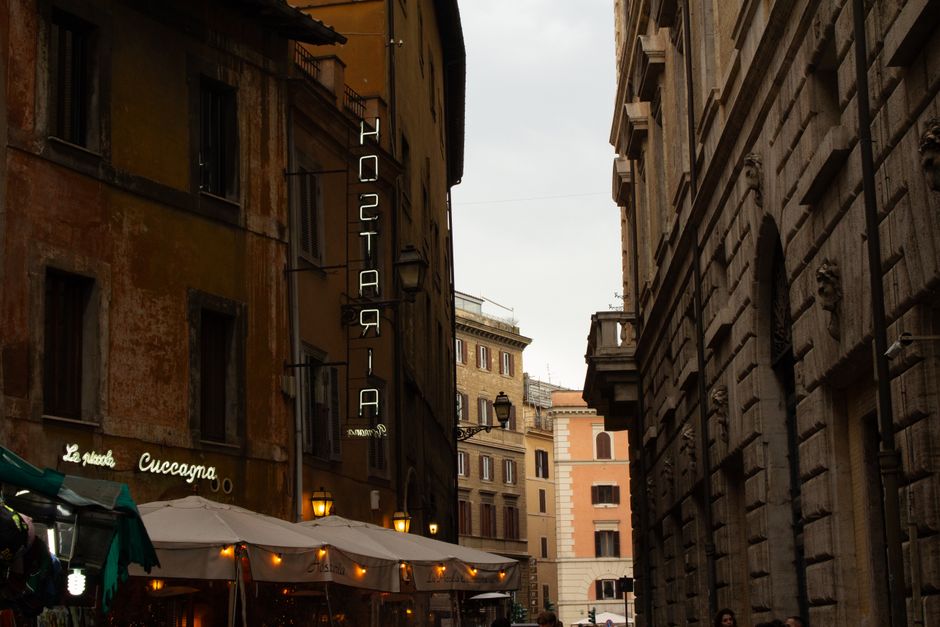
Most people can live in Italy on somewhere between €950 and €3,500 a month ($1,095 to $4,025), and the €2,500 gap between those numbers is the whole story. A single person gets by on about €950 to €1,000 in a southern town like Palermo. A family of four in central Milan burns through €4,500 without trying. Italy is not one cost of living. It is at least two countries stacked on top of each other, and the averages you see everywhere hide that.
All figures below are dated and sourced. Currency conversions use the August 2026 rate of 1 EUR = 1.15 USD (ECB reference rate 1.1485 on 31 July 2026; TradingEconomics quoted 1.152 the same day). Rents come from Numbeo city pages updated between June and July 2026, cross-checked against Idealista and Immobiliare listings. Where a number is a Numbeo estimator output rather than a real market rent, it is labeled.
Quick answer: what Italy actually costs
Here is the honest range for one person, rent included, before you pick a city:
- Lean / student: €950 to €1,300 a month ($1,095 to $1,495), mostly in the south or in a shared flat.
- Single professional or remote worker: €1,700 to €2,400 a month ($1,955 to $2,760) in a mid-tier city with your own one-bedroom.
- Milan or central Florence, comfortable: €2,500 to €3,500+ a month ($2,875 to $4,025+).
A family of four ranges from about €2,400 a month in Palermo to €4,600 in Milan, per Impatria’s late-2025 Idealista-based model. Below are the line-item budgets, then the city breakdown, then the costs nobody warns you about.
Three monthly budgets, itemized
Find your best country to move to
Answer three quick questions and we will rank the best matches from our database of 197 countries.
Budget 1: Student or lean single (shared flat, cheaper city)
Assumes a room in a shared apartment or a small studio outside the center in Turin, Naples, or Palermo.
| Item | EUR/month | USD/month | |—|—|—| | Rent (room in shared flat / studio) | €450 | $518 | | Utilities (share, incl heating) | €70 | $81 | | Internet (shared) | €15 | $17 | | Groceries | €220 | $253 | | Transport (monthly pass) | €35 | $40 | | Health (student SSN, €700/yr) | €58 | $67 | | Phone | €10 | $12 | | Entertainment | €90 | $104 | | Total | €948 | $1,090 |
That works in the south and in Turin. Try it in Milan and rent alone eats the whole budget.
Budget 2: Single professional or nomad (own one-bedroom, mid-tier city)
Assumes a one-bedroom outside the center in Rome or Bologna, decent lifestyle, eating out a couple of times a week.
| Item | EUR/month | USD/month | |—|—|—| | Rent (1-bed, outside center) | €800 | $920 | | Condominio (building fees) | €80 | $92 | | Utilities (electric, gas/heating, water) | €160 | $184 | | Internet | €28 | $32 | | Groceries | €300 | $345 | | Transport (monthly pass) | €35 | $40 | | Health (private insurance) | €120 | $138 | | Phone | €12 | $14 | | Dining and entertainment | €300 | $345 | | Total | €1,835 | $2,110 |
This lines up with the real-world €1,800 to €2,200 that people actually spend in Rome. Numbeo’s estimator puts a single person’s costs excluding rent at €844 in Rome and €1,052 in Milan, which tracks once you add rent on top.
Budget 3: Family of four (three-bedroom, mid-tier city)
Assumes a three-bedroom outside the center in Rome or Bologna, one car, two kids.
| Item | EUR/month | USD/month | |—|—|—| | Rent (3-bed, outside center) | €1,500 | $1,725 | | Condominio | €120 | $138 | | Utilities (incl gas heating) | €230 | $265 | | Internet | €30 | $35 | | Groceries | €800 | $920 | | Transport (passes + fuel) | €250 | $288 | | Health (SSN + private top-up) | €200 | $230 | | Phone (family) | €40 | $46 | | Kids and entertainment | €350 | $403 | | Total | €3,520 | $4,048 |
Drop that same family into Naples or Palermo and the rent falls to roughly €1,000, which pulls the total under €3,000. Move them into central Milan and rent alone hits €3,200, pushing the total past €4,600. Same family. Same standards. A €1,600 monthly swing driven almost entirely by where they sign the lease.
The north-south divide is the real map
Forget the national average. Numbeo’s country page says a single person spends €893.70 excluding rent, but that number is meaningless because Milan and Palermo are not in the same universe. Rent index tells the truer story: Milan sits at 41.2, Florence 33.4, Rome 30.9, Naples 23.3, and Palermo lower still. Here is what that means in real one-bedroom rents.
| City | 1-bed, center | 1-bed, outside | Data date | |—|—|—|—| | Milan | €1,504 ($1,730) | €1,043 ($1,199) | Jun 2026 | | Florence | €1,265 ($1,455) | €862 ($991) | Jun 2026 | | Bologna | €1,008 ($1,159) | €782 ($899) | Jun 2026 | | Rome | €1,097 ($1,262) | €810 ($932) | Jul 2026 | | Naples | €921 ($1,059) | €612 ($704) | Jul 2026 | | Turin | €746 ($858) | €526 ($605) | Jul 2026 | | Palermo | €658 ($757) | €444 ($511) | Jul 2026 |
Read that top to bottom. A center one-bedroom in Milan costs 2.3 times the same flat in Palermo. This is the single fact most cost-of-living guides flatten into a tidy “Italy is affordable” line. It is affordable in Lecce. It is Paris-adjacent in Milan.
Milan is the outlier and the financial capital. Rent index 41.2, cost of living index 76.8, both the highest in the country. You pay for it partly because salaries are higher here (average net €1,939 versus €1,745 in Rome), so locals absorb it. Arriving on a foreign income without that salary cushion, Milan feels brutal.
Florence surprises people. On rent it runs 22% above Bologna and 52% above Turin. Tuscany is not cheap. The postcard tax is real.
Rome sits in the middle and always has. A one-bedroom in the center is cheaper than in Milan by about a third, groceries and transit run lower, and the €35 monthly transit pass beats Milan’s €39. Rome is the default “big city that still works” answer for most people.
Bologna and Turin are the value plays in the north. Turin especially: a real northern city, aperitivo culture, mountains an hour away, one-bedroom rents starting near €526 outside the center. It is the cheapest major city above Rome by a clear margin.
Naples, Palermo, and the south are where Italy starts costing like Portugal instead of France. Naples center one-bedroom €921, Palermo €658, and smaller towns like Lecce and Catania go lower again. ISTAT data shows southern household spending running roughly 38% below the north-east. A family that needs €4,600 in Milan can live on €2,400 in Palermo.
Small towns and the 1-euro house trap
The borgo dream is real but heavily edited on social media. Rent in a village can drop under €400, and yes, towns do sell abandoned houses for one euro. The euro is the cheapest part. Comuni typically require an escrow deposit around $5,000 plus a renovation escrow near $15,000, a commitment to finish restoration within about three years, and the actual work: rewiring, plumbing from scratch, a new roof, sometimes a septic system that does not exist yet. One British couple bought an €80,000 abandoned hamlet and watched renovation costs drain their savings in ten months. Agents will quietly tell you it is often cheaper to buy a normal house under €50,000 than to chase a €1 headline. Budget for the renovation, not the price tag.
The hidden costs that wreck first-year budgets
The monthly numbers are the easy part. These are the ones that catch newcomers.
Moving in costs about five months of rent upfront. The security deposit (deposito cauzionale) is capped at three months of base rent by Law 392/1978. Add the first month, then the agency fee (provvigione), which is usually one month plus 22% VAT, or 10% to 15% of the annual rent. On a €900 flat that is roughly €4,500 before you own a single fork.
Condominio fees are separate and easy to miss. Listings read “€1,000 + €150 spese.” That €150 is the spese condominiali, covering shared heating, stair cleaning, the elevator, and a doorman if the building has one. Range is €30 to €200-plus a month. Worse, buildings with central heating do a year-end reconciliation. Run the radiators hard all winter and you can open a €400 catch-up bill in March.
The codice fiscale gates everything. This tax code is free, but you cannot sign a lease, open a utility account, or get a phone contract without it. Get it at an Agenzia delle Entrate office or an Italian consulate before you start viewing apartments seriously.
Heating and gas are the notorious winter line. Northern winters mean real heating bills. Utilities for an 85m² flat run about €182 a month in Rome and €222 in Milan on Numbeo’s average, and those averages get dragged up by January and February gas. If the building has a shared boiler, that cost hides inside your condominio instead, which is why the March reconciliation stings.
Fuel and tolls punish anyone who drives. As of late July 2026, self-service petrol averaged about €1.98 a litre and diesel €2.18, per the Mimit fuel observatory. On motorways it runs higher, around €2.07 petrol and €2.25 diesel, and Milan stations touched €2.60. At €1.98 a litre, petrol works out to roughly $8.60 per US gallon. Motorway tolls add about €7 per 100 km; Milan to Naples costs around €57 one way. In the cities you do not need a car. In the countryside you do, and it adds up fast.
Taxes climb quickly if you earn here. IRPEF for 2026 runs 23% up to €28,000, 33% from €28,001 to €50,000, and 43% above €50,000, plus a regional surcharge of 1.23% to 3.33% and a municipal one up to 0.9% (Rome charges the full 0.9%). Top marginal rates land near 45% to 47%. Residents are taxed on worldwide income. There are real breaks: a 7% flat tax for foreign pensioners who move to small southern towns, and a €300,000 flat tax on foreign income for high-net-worth new residents arriving from 1 January 2026. Those help specific people, not everyone.
Owning property means IMU. Your non-luxury main residence is exempt. Everything else pays IMU, and here is the catch for foreigners: if you live abroad, your Italian property is treated as a second home by default, so you pay. The base rate is 0.86%, and most comuni set it near 1.06% (10.6 per thousand) for second homes, calculated on the cadastral value. There is also TARI, the municipal waste tax, billed on floor area.
Healthcare is cheap if you qualify, and a real cost if you do not. The SSN, Italy’s national health service, is excellent and low-cost once you are in through work or residency. Voluntary registration for others is not free: students pay about €700 a year, while others pay a percentage of income with a minimum around €2,000 a year, depending on region. Many nomads and early-stage retirees carry private insurance instead, which is why the budgets above include a health line rather than assuming free care.
Settling in is not only about spreadsheets. Building a social life takes deliberate effort in a new country, and it changes how expensive a place feels day to day. If you are planning the move, this guide on how to make friends in a new country covers the part the budget tables leave out. There is also a free group for expats in Italy on this site.
FAQ
Is Italy expensive to live in? Compared to the United States, no. Numbeo puts Italy’s cost of living about 11% below the US and rent about 48% lower as of July 2026. Compared to other options in southern Europe, it depends entirely on the city. The south rivals Portugal; Milan approaches French prices.
How much money do you need to live comfortably in Italy? For one person, plan on €1,700 to €2,400 a month ($1,955 to $2,760) in a mid-tier city like Rome or Bologna with your own apartment. In the south you can be comfortable on €1,300 to €1,600. In Milan or central Florence, comfortable starts around €2,500 and climbs.
Can you live in Italy on €1,500 a month? Yes, but only in the right city. The working rule is keeping rent under 35% of net income, so about €500 to €525. That is realistic in Turin, Palermo, Catania, or Perugia. In Milan, Florence, or central Rome, €1,500 means shared housing and tight math.
What is the cheapest city to live in Italy? Among the majors, Palermo, with center one-bedrooms near €658. Smaller southern cities like Lecce and Catania go lower again, with all-in single budgets around €1,000 to €1,150 a month.
Is southern Italy really cheaper than the north? Yes, and dramatically so. ISTAT data shows southern household spending roughly 38% below the north-east. A Milan one-bedroom costs about 2.3 times the same flat in Palermo. The national average hides this completely.
Do foreigners pay high taxes in Italy? If you become a tax resident and earn a normal salary, yes, with top marginal rates near 45% to 47%. But targeted regimes cut the burden sharply for foreign pensioners (7% flat tax in southern towns) and high earners (€300,000 flat tax on foreign income). Assess your own case before assuming either extreme.