
Cost of Living in Thailand (2026): Real Monthly Budgets in Baht and Dollars
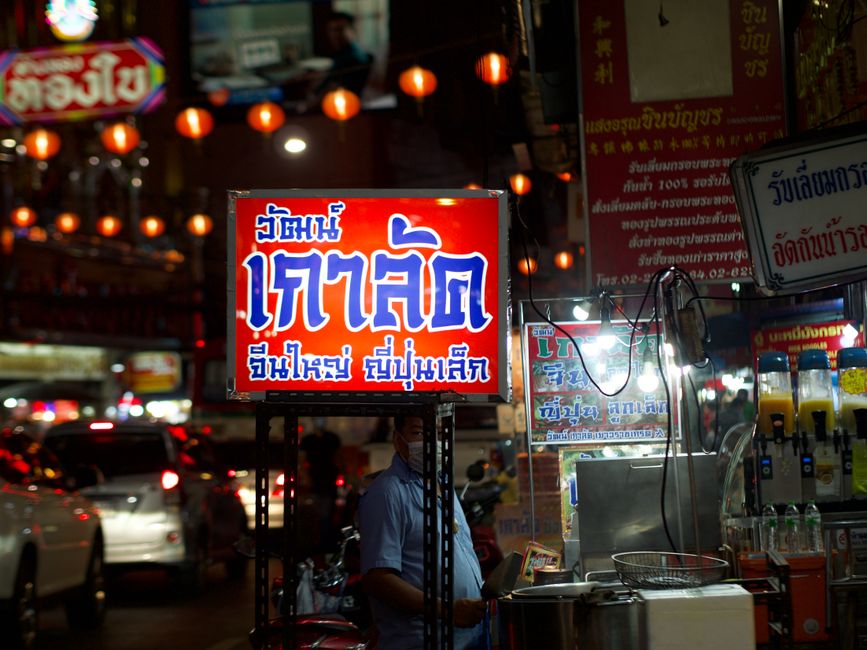
Plan on somewhere between $850 and $4,500 a month to live in Thailand, depending on the city, the household, and how much of your old life you refuse to give up. A single nomad who eats Thai food and rents outside the center can hold the line near $850. A family in a Bangkok condo with international health cover and a car spends five times that. Both numbers are real. Both are 2026.
Here is the part most guides skip. The 2015 blogs promising a $600 dream month are lying to you, or at least quoting a currency and a rental market that no longer exist. This piece uses current figures, states every source, and shows both baht and dollars so you can sanity-check as you read.
The exchange rate matters more than you think
As of early August 2026, one US dollar buys roughly 33.4 Thai baht, so one baht is about three US cents. The rate has drifted between 33.3 and 33.7 across the major converters this summer (Wise, Xe, Investing.com). All dollar figures below use 33.4.
Why flag it so early? Because a chunk of the “Thailand is cheap” folklore online was written when the baht sat near 30 or even 35 to the dollar, and old numbers get copied forever. One popular cost guide still quotes “roughly 31 THB to 1 USD.” The baht is stronger than that now, which quietly makes everything about 7 percent pricier in dollar terms than those posts imply. Small gap, real money over a year.
What a month actually costs: three honest budgets
Find your best country to move to
Answer three quick questions and we will rank the best matches from our database of 197 countries.
These tables are built from sourced component ranges (rents from Numbeo and live listings, insurance from Thaiger, utilities and food from 2026 city breakdowns). Each line sits inside a real, current range, not a guess. Visa is amortized monthly.
Lean solo (Chiang Mai or a cheaper city, mostly Thai food)
| Item | THB / month | USD / month | |—|—|—| | Rent (studio or 1BR outside center) | 9,000 | $269 | | Utilities (electric, water) | 1,500 | $45 | | Home internet (fiber) | 600 | $18 | | Food (street food, cooking at home) | 8,000 | $240 | | Transport (motorbike rental + fuel) | 2,500 | $75 | | Health insurance (budget plan, age 30s) | 2,700 | $81 | | Visa (DTV amortized) | 1,500 | $45 | | Entertainment | 3,000 | $90 | | Total | ~28,800 | ~$863 |
Comfortable nomad (1BR city-centre condo, mix of Thai and Western)
| Item | THB / month | USD / month | |—|—|—| | Rent (1BR city centre, pool and gym) | 20,000 | $599 | | Utilities (aircon most days) | 3,000 | $90 | | Home internet | 700 | $21 | | Food (mix, some Western, cafes) | 15,000 | $449 | | Transport (Grab + occasional scooter) | 4,000 | $120 | | Health insurance (comprehensive IPMI, 30s-40s) | 5,500 | $165 | | Visa (DTV amortized) | 1,500 | $45 | | Coworking + entertainment | 8,000 | $240 | | Total | ~57,700 | ~$1,728 |
Family or premium (family of four, Bangkok or Phuket)
| Item | THB / month | USD / month | |—|—|—| | Rent (3BR city centre or pool villa) | 60,000 | $1,796 | | Utilities | 6,000 | $180 | | Home internet | 1,000 | $30 | | Food (family, regular Western meals) | 35,000 | $1,048 | | Transport (car or heavy Grab use) | 12,000 | $359 | | Health insurance (family IPMI) | 20,000 | $599 | | Visa (DTV family amortized) | 3,000 | $90 | | Entertainment | 15,000 | $449 | | Total | ~152,000 | ~$4,551 |
One warning on the family table. It leaves out international school, which is the single largest expat expense in Thailand once kids are in the picture. Bangkok international tuition runs from a few hundred thousand baht a year at the budget end to well over a million at the top tier. If that applies to you, add it as its own line.
Rent by city: real 1-bedroom ranges
Rent is the number that swings your whole budget, and it varies wildly by island and neighborhood. All of these are current 2026 figures.
Bangkok. A 1-bedroom in the city centre averages ฿22,772 (about $682), with Numbeo’s range at ฿15,000 to ฿35,000. Outside the centre the average drops to ฿10,864 ($325). Prime Sukhumvit blocks like Thonglor and Phrom Phong ask ฿35,000 to ฿60,000, while a studio out in On Nut or Bang Na goes for ฿8,000 to ฿16,000 (Numbeo, Nestopa).
Chiang Mai. The cheapest of the big destinations. City-centre 1-bed averages ฿15,648 ($469), and outside the centre ฿9,315 ($279), with plenty of Nimman condos in the ฿12,000 to ฿22,000 band (Numbeo).
Phuket. Pricier than people expect. City-centre 1-bed averages ฿24,467 ($732), higher than Bangkok. Along the Patong, Kata and Karon strip you pay ฿20,000 to ฿40,000. The Bang Tao and Surin condos near Laguna run ฿15,000 to ฿25,000, and a Rawai or Chalong studio can still be found at ฿8,000 to ฿15,000. A 3-bedroom pool villa, which is what a lot of people actually move to Phuket for, sits at ฿60,000 to ฿120,000 (Numbeo, Nestopa).
Koh Samui. A basic studio in Bophut or Maenam runs ฿8,000 to ฿15,000. A proper 1-bedroom lands around ฿12,000 to ฿25,000, and higher-end long-term 1-beds can hit ฿28,000 to ฿45,000. Named buildings show the spread: Samui Emerald asks ฿18,000 to ฿25,000, Samui Star ฿12,000 to ฿20,000 (VisualThailand, Bamboo Routes).
Koh Lanta. The quiet, small-community option. A basic fan bungalow set back from the beach starts at ฿8,000 to ฿12,000. An air-conditioned 1-bed near the west coast runs ฿12,000 to ฿20,000, and pool villas climb to ฿25,000 to ฿45,000. A real listing in Sala Dan right now: a furnished 30 sqm 1-bed at ฿20,400 a month (geronimo-ai, 108siam).
Pattaya. Cheaper than Bangkok for what you get. City-centre 1-bed averages about ฿17,336 ($519), roughly 21 percent under Bangkok. Central Pattaya and Beach Road condos run ฿15,000 to ฿25,000, while Jomtien and Naklua drop to ฿10,000 to ฿18,000 (Numbeo, Nestopa).
Notice the pattern. The islands people picture as “cheap” (Phuket, Samui) are the expensive ones. The mainland cities carry your budget furthest.
The hidden costs nobody puts in the headline number
The monthly average looks tidy until reality adds line items. Here are the ones that catch people.
Deposits up front. Signing a lease almost always means two months of rent as a security deposit plus one month in advance. On a ฿20,000 condo that is ฿60,000 ($1,796) before you have slept a single night.
Aircon in hot season. From March to May the heat is brutal and the AC runs constantly. Electricity that sits around ฿1,000 to ฿1,500 in mild months jumps to ฿2,000 to ฿5,000 when you cool a condo all day (VisualThailand). Budget for the spike or it will surprise you every April.
Dual pricing. At national parks, foreigners pay several times the Thai rate. A local pays ฿40 to ฿60, a foreigner pays ฿200 to ฿400 for the same gate. And a Pink ID card usually will not save you: at tier-one parks like Doi Inthanon and Khao Yai, rangers reject it and charge the foreigner rate anyway (thriveinthailand, Thailand Expat Hub). It is a few hundred baht each time, not a budget-killer, but it adds up and it stings.
Imported goods. Thai produce and street food are cheap. The stuff from home is not. Import duty pushes wine, cheese, and Western groceries well above what you would pay back home, and a mid-range bottle of wine easily runs ฿700 to ฿1,000. If your diet is imported, your food line balloons.
Visa runs and extensions. If you are not on a long-stay visa, the old game of border bounces still costs you transport, a night or two away, and time. Even on the DTV, extending your stay in-country costs ฿1,900 each time at immigration.
Health insurance, which is not optional. More on that next, because it is the line most people lowball.
Health insurance: the line item people underestimate
Thailand’s private hospitals are excellent and you pay out of pocket if you have no cover. Premiums swing hard by age and plan tier. For a 30-year-old, budget international plans run about $80 to $120 a month, comprehensive plans $120 to $200, and Cigna Global’s international tiers $150 to $360 (ThailandStarterKit, Thaiger).
The number climbs steeply with age. Thaiger’s 2026 breakdown puts a comparable plan at two to three times more at 60 than at 30. Budget plans run roughly $150 to $400 a month in your 50s, and Cigna’s international tiers reach $400 to $950 and up past 60. Many local insurers simply stop taking new applicants somewhere between 65 and 75. If you are moving here later in life, price cover before you fall in love with a condo.
The DTV visa and the money you need to show
The Destination Thailand Visa (DTV) is the one most remote workers use now. The financial bar is a bank balance of at least 500,000 THB, roughly $16,000, £11,000, or €15,000 (Thai Embassy Washington, Thaiger).
Two details trip people up. First, the money has to be seasoned: it must sit in the account for the full three months your statements cover, with each closing balance at or above the threshold. A sudden deposit right before you apply is the most common reason for rejection. Second, it has to be an ordinary bank balance. Crypto and brokerage statements are not accepted (thaiembassy.com). If your net worth lives in a brokerage, move enough into a savings account and let it sit.
The rest: the visa fee is 10,000 THB (about $300 to $500 depending on the embassy), it is valid five years with multiple entries, and each entry lets you stay 180 days, extendable once for another 180 at immigration for 1,900 THB. You must be at least 20 and apply from outside Thailand. A spouse and children under 20 can come as dependents.
If the DTV does not fit, the retirement Non-Imm O wants 800,000 THB in a Thai bank, and the LTR visa targets higher earners with income near US$80,000 or US$1 million in assets.
So is Thailand still cheap?
Yes, compared to the US, UK, or Australia. No, compared to the fairy tale. A comfortable single life in a decent city condo with real health cover lands near $1,700 a month, not the $600 the old blogs promised. The gap is stronger currency, a rental market that has caught up, and insurance that people used to skip and now cannot. We ran the same numbers for the usual regional alternative in our Vietnam cost of living breakdown.
The value is still there. It just rewards people who plan with real numbers instead of nostalgia. Pick a mainland city over a tourist island if budget is the priority, get your visa money seasoned early, and price your insurance for the age you actually are.
One last thing that no spreadsheet captures: the cost of arriving and knowing nobody. Budgeting for a coworking membership and a couple of weekly activities is not a luxury line, it is how you avoid an expensive, lonely first three months. We wrote a whole guide on how to make friends in Thailand for exactly that reason.
FAQ
How much money do you need per month to live in Thailand? A lean solo budget in a cheaper city like Chiang Mai runs about 28,800 THB ($863). A comfortable single life in a city-centre condo lands near 57,700 THB ($1,728). A family of four in Bangkok or Phuket spends around 152,000 THB ($4,551), before international school.
Is Thailand cheaper than it used to be? No. It is pricier than the pre-2020 blogs suggest. The baht is stronger (about 33.4 to the dollar in August 2026 versus 31 in many old posts), rents in Bangkok and the islands have risen, and health insurance is now a real monthly cost most nomads carry.
What is the cheapest city to live in Thailand? Among the popular destinations, Chiang Mai. A city-centre 1-bed averages 15,648 THB ($469), and a single person’s non-rent costs run about 18,157 THB ($541) a month, the lowest of the major expat cities.
How much do you need in the bank for the Thailand DTV visa? 500,000 THB (about $16,000), held in an ordinary bank account for the full three months your statements cover. Crypto and brokerage balances are not accepted, and the funds must be seasoned, not freshly deposited.
Do foreigners really pay more in Thailand? At government-run attractions, yes. National parks charge foreigners 200 to 400 THB versus 40 to 60 for Thai nationals, and a Pink ID card usually will not get you the local rate at the busy parks. Day to day, street food and Thai groceries are priced the same for everyone.
Is health insurance required in Thailand? It is not always legally mandatory, but going without it is a gamble, since you pay private hospital bills yourself. Budget from about $80 a month for a 30-year-old on a basic plan up to several hundred a month as you get older.