
How to Make Friends in London (The Honest Guide, Not a List of Apps)
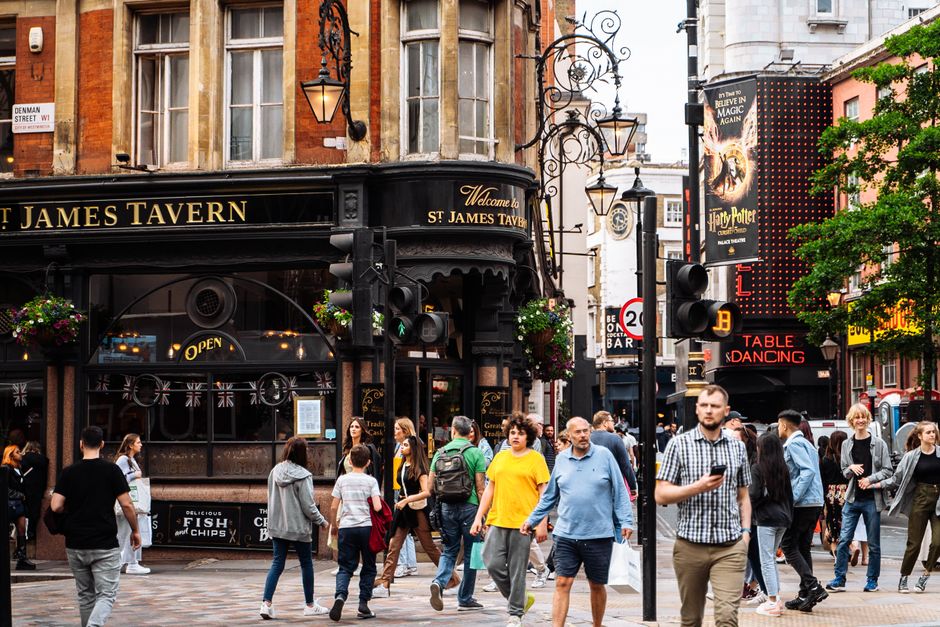
You can be surrounded by nine million people and speak to nobody for four days. Plenty of Londoners have done exactly that and told nobody about it.
The numbers back the feeling up. Around 35% of Londoners report feeling lonely against 28% across the UK, which makes this the loneliest city in the country. A 2022 report for City Hall put roughly 700,000 Londoners in the severely lonely category, rising to 61% among people who live alone. The loneliest constituency in Britain is Vauxhall and Camberwell Green, right in the middle of everything.
So it is not you. It also will not fix itself, and most advice on this is a list of apps written by someone who has never tried getting from Walthamstow to Wimbledon on a Tuesday night.
Why making friends in London is structurally hard
The city is too big for one social life. London is not a city the way Lisbon or Edinburgh is. It is thirty towns stitched together by a train network. A friend in Zone 4 south is, in practice, unreachable from north London. Not impossible, just expensive in time. Past roughly 45 minutes each way, spontaneity dies. Nobody pops round. Nobody says “come for one drink” when the drink costs two and a half hours. Your friendship radius is measured in tube stops, and it is smaller than you think.
People leave constantly. Someone gets priced out, someone moves back to Manchester or Melbourne, someone buys in Kent because the maths finally beat them. Five years here and attrition takes a real chunk of your network. Friendship in London is maintenance, not a project you finish.
Groups formed at 21 do not take applications at 33. Most Londoners in their thirties run a circle assembled at university or in a first job. It is closed, not out of hostility, but because it already has a WhatsApp group, an in-joke economy and a full calendar. Building parallel to it beats trying to break in.
And the drink that never happens. You will hear “we should grab a drink sometime” constantly. Not a lie, not an invitation, just friendly noise. The most useful thing you can change is to answer it with a date. “Yes, Thursday? I’m near London Bridge.” About a third say yes. That third is your social life.
Are Londoners actually cold?
Find your best country to move to
Answer three quick questions and we will rank the best matches from our database of 197 countries.
Explore these countries
 United Kingdom
Partly. “Londoners are unfriendly” is both true and a bad explanation.
True: there is a hard norm against unsolicited contact in transit spaces. Nobody talks on the tube. Nobody chats in a queue. To anyone from a culture where a bus stop is a conversation, that reads as coldness. It is closer to a crowding adaptation. Pass ten thousand strangers a day and ignoring people is the only way to function.
Not true: that Londoners will not engage. Put the same person somewhere with a shared reason to be there (a climbing wall, a five-a-side pitch, a pottery class) and they open up like anyone else. The barrier is context, not character. Over a third of Londoners were born outside the UK, so in plenty of boroughs being the outsider makes you the majority.
The rule that beats every tip on every other list
Repeated exposure to the same people at a fixed time.
That is it. Not events, not apps, not “putting yourself out there”. You become friends with people you see repeatedly in a setting where nobody had to decide to meet you.
Which is why one-off Meetup events mostly fail. You meet fifteen people once, exchange nothing, go home. And why a Tuesday class at 19:00 for eight weeks works even when the class is mediocre. Week one you nod. Week three you know two names. Week six somebody suggests the pub afterwards. Nobody had to be brave.
Judge every option below by one test: will I see the same faces next week?
Routes that actually work in London
Run clubs. The biggest social shift in London in years, and much of it is free. parkrun is the obvious entry: free timed 5K, 09:00 every Saturday, roughly 65 events across Greater London, and the coffee afterwards is the actual product. Run Talk Run is free and deliberately non-competitive, with groups in Bow, Hackney, Finsbury Park, Ealing, Dulwich, Balham, Tooting, Brixton and Croydon. Midnight Runners does loud bootcamp-style night runs. Track Mafia meets at Paddington Recreation Ground on Thursdays. GoodGym pairs a group run with a community task: 90 minutes, free, just turn up.
Climbing gyms. Bouldering is the most sociable indoor sport in the city, because you spend most of the session standing around watching strangers fail at the same problem. The Castle Climbing Centre in Stoke Newington is £12.50 a visit (£7.50 concession), VauxWall about £14.50 peak. Go alone, same evening every week.
Five-a-side. Footy Addicts books you into casual games as a solo player for roughly £5 to £10, free if you host. Same slot, same pitch, regular within a month.
Evening classes. The most underrated route in London and the best one if you are over 30. City Lit near Covent Garden and Morley College run hundreds of short courses: languages, ceramics, life drawing, jazz piano, screenwriting. Morley taster days start around £40, City Lit short courses mostly land between £79 and £129. Eight to ten weeks of the same room, same people, same time. That is the mechanism, bought outright.
Volunteering. Team London lists opportunities in every borough: food banks, city farms, Thames21 river cleanups, befriending schemes. It skews older and more local than Meetup, which is why it produces friends who are still here in three years.
Borough-level everything. Stop thinking “London”. Think Hackney, or Peckham, or Walthamstow. Search Facebook for your postcode plus “community”, get on Nextdoor, find the residents’ association, the community garden, the repair café. One friend a fifteen-minute walk away beats five across the river.
Faith communities and supporter groups. Unfashionable, so other guides skip them. Churches, mosques, synagogues and temples are structurally the most effective friendship machines in London: weekly, free, intergenerational, and somebody notices when you stop coming. Supporter groups do the same job, in the same pub, every match.
The pub problem, and what to do if you do not drink
The pub is London’s default social infrastructure. Work drinks, birthdays, the thing after the thing. If you drink, becoming a regular at one local genuinely works: same pub, same night, sit at the bar rather than a table, learn the staff’s names. Give it two months.
If you do not drink you are not locked out, but you need a different anchor. Sport is the obvious one, and it comes with a built-in reason to leave early. Specialty coffee shops support the same regular-customer dynamic, board game cafés like Draughts run drop-in nights, and Club Soda lists sober social groups and alcohol-free bars. You can also just go to the pub and drink lime and soda. Nobody has ever checked.
Work, remote work, and the friendship vacuum
If you have an office, that is your cheapest source of friends. Use it hard for the first year: say yes to everything, including things you do not want to attend, then convert one colleague into a weekend friend. One is enough.
If you work remotely, be clear about what you lost. The office is the only structure in adult life that produces friends by accident, and you now have to buy it back. A coworking space or a fixed café on the same days helps, because the point is not productivity, it is being recognised. Add one weekly evening commitment on top. Otherwise your day contains zero unplanned human contact, and you will not notice how bad that is until month four.
Where you are starting from changes the playbook
New to London from abroad. Your risk is the expat bubble. It is comfortable and it is also the highest-churn group in the city. Use expat groups for the first three months to get a floor under you, then build a second, more local circle. Mix, do not substitute.
In your thirties. You are fighting closed circles and diverging life stages. Skip anything aimed at 20-somethings. Go where commitment is required: a course, a league, a choir, a volunteering rota. Adults with jobs and mortgages make friends through obligation, not spontaneity.
Students. Easiest run of anyone, and a two-year window. The thing most students skip: build at least one friendship outside your university, so that when everyone graduates and scatters you still have an anchor here.
The barriers nobody writes about
Cost. A round for four in a central pub leaves little change from £30. Dinner is £40 before you have thought about it. This quietly filters social life by income. If money is tight, do not withdraw, just live on the free tier: parkrun, GoodGym, walking, park football, free museums, gatherings at home.
Distance kills good intentions. Two friends 50 minutes away will see you a quarter as often as one friend ten minutes away. Weight your effort toward your own postcode. It feels limiting, and it is the highest-return decision here.
Winter. Dark at 16:00 from November, wet, every plan indoors and paid for. This is when new social lives collapse. The only defence is a commitment already in your calendar before the clocks change, ideally one where somebody messages you if you skip it.
The flatshare lottery. Every other guide says houseshare to meet people. Sometimes brilliant. Often three people who bought a rice cooker and never leave their rooms. Ask at the viewing: do people eat together, is there a group chat, what happens at weekends. A social flat is worth £100 a month more. A silent one is lonely with company.
A realistic 90-day plan
1. Week 1: pick one free weekly thing in your own borough (parkrun, Run Talk Run, GoodGym). Calendar, recurring. 2. Week 2: book one paid course with a fixed weekly slot for at least eight weeks. 3. Weeks 3 to 6: turn up to both without evaluating whether it is working. It will not feel like it is working. Continue. 4. Week 6 onward: convert. Suggest something specific to one person: coffee after, a pint after, a Sunday walk. Ask five times, expect two yes. 5. Weeks 8 to 12: be the organiser. Whoever sends the message is the centre of the group. Unglamorous, and the whole trick.
Judge none of it before six months. Most people quit at week four, right before it starts working.
FAQ
Why is it so hard to make friends in London? Distance, churn and closed circles. Friends live an hour apart, people keep leaving, and most adults here already run a group formed at university. None of it is about anyone being unfriendly.
How long does it take to make friends in London? Three to six months to have people you can call at short notice, one to two years for real closeness. Research puts adult closeness at roughly 200 hours of shared time, which a weekly two-hour activity delivers over about two years. Frequency beats charisma.
What apps are best for making friends in London? Meetup for recurring hobby groups, Bumble BFF for one-to-one, Nextdoor and Facebook groups for your postcode, Strava if you run or cycle. Rank them by whether they lead to something weekly. Apps that only produce single meetings rarely convert.
How can I make friends in London for free? parkrun, GoodGym, Run Talk Run, borough volunteering through Team London, free museum lates, community gardens, park football, faith communities. A full social life on zero budget works here, it just has to be built around the outdoors and volunteering rather than eating and drinking out.
How do I make friends in London in my 30s? Go where attendance is expected rather than optional: an evening course, a league, a choir, a volunteering rota, a run club with a fixed slot. And accept that you will be doing the inviting, because everyone your age is waiting for someone else to organise it.
Related reading
Most of what makes London hard is true of any big city you move to alone. Making friends in a new city covers the general playbook, and making friends as an adult explains why this got so much harder after your twenties.