
How to Make Friends in Malta
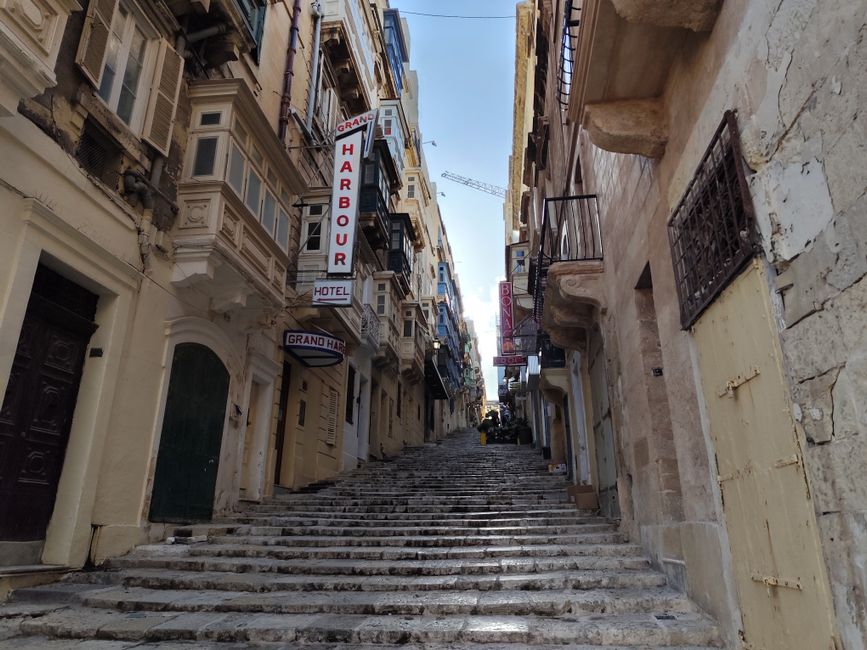
Nobody warns you about the specific loneliness of a small island. You land in Sliema, the sea is absurd, the rent is paid, and by week three you have swapped Instagram handles with eleven people and had exactly zero real conversations. Everyone is friendly. Nobody is available.
That gap is the whole problem. Malta is not a hard place to meet people. It is a hard place to keep them. Half a million residents on 316 square kilometres means you bump into the same faces at Spinola Bay, at the ferry, at the gym, over and over, which sounds like a friendship cheat code and mostly is. The catch is that a large slice of those faces will be gone within eighteen months.
Here is the honest version, without the “just join a Meetup!” filler.
English is an official language, and it changes everything
Maltese and English are both official, and English runs business, government and daily life. Compare that to Lisbon or Valencia, where the first eight months of your social life are a comprehension exercise. In Malta you can walk into a running club on day four and be a functioning member by day five.
The flip side: because English works, most foreigners never learn a word of Maltese and socialise exclusively with other foreigners. Ease turns into laziness fast. Learn “bongu” and “grazzi” at minimum. Costs nothing, lands better than you expect.
The Maltese are warm. They also do not need new friends.
Find your best country to move to
Answer three quick questions and we will rank the best matches from our database of 197 countries.
This is the thing that stings, and almost no guide says it plainly.
Maltese social circles are built on family and village. People know their friends from primary school, from the parish, from their father’s band club. A Maltese person in their thirties is not out looking for new friends, because they already have thirty and eleven of them are cousins. That is not coldness. It is what a stable, family-centred society looks like from outside.
What works is entering through a structure instead of approaching individuals. Sports clubs, band clubs, volunteering, a village pool. Join something Maltese people already belong to and the circle absorbs you sideways. Try to befriend a Maltese colleague one on one and you get four years of pleasant coffee and no wedding invitation.
Where you live decides who you meet
Your postcode is a social decision, not just a budget one.
Sliema, St Julian’s and Gzira are the expat corridor, where iGaming and fintech staff, digital nomads and language students all pile up. Highest density of people actively looking for friends, highest churn, highest noise. Arrived alone and know nobody? Live here for the first year. Just know that Paceville at midnight is a tourist meat grinder, not where friendships happen.
Valletta has a tiny residential population and most of the island’s creative scene. Slower, older, better conversations. Bad if you want to stumble into people, good if you already have a hobby to build around.
Bugibba and Qawra in the north are cheaper and skew towards long-stay retirees, budget renters and seasonal workers. The British retiree community there is welcoming and ignored by every guide aimed at nomads. Over 55? This is your zone, not Sliema.
Gozo is a different country wearing Malta’s passport. Around 30,000 people, a 25 minute ferry from Ċirkewwa, and a social scene that runs on knowing your neighbours. Deep friendships form faster because nobody leaves after a year. The cost: Saturday night is a house with six people in it, not a bar with sixty.
The iGaming scene is Malta’s real social operating system
Malta’s gaming, fintech and crypto industry pulled in thousands of young foreign workers, and that workforce built the island’s most reliable social machine. Work in it and you are handed a friend group on day one: team lunches, summer parties, five-a-side leagues, leaving drinks roughly monthly.
If you do not work in it, you can still use it. Conferences like SiGMA fill Malta with after-parties that are barely gated, and coworking spaces are stuffed with people orbiting the same sector. The Hive in Valletta and Busilearn in Gzira both run evening events where nobody checks your employer.
Blunt caveat: this crowd is 24 to 35, drinks a lot, and talks about work constantly. Fast route to twenty acquaintances, slow route to two friends. Entry point, not destination.
Get in the water. It is the fastest route in.
Malta is one of Europe’s best dive destinations, with wrecks, caves and visibility that ruins you for other seas. Dive clubs run year round, pair you with strangers by design, and something about equipment checks and shared risk skips six months of small talk.
Water polo matters even more, and almost no expat guide mentions it. Close to a national obsession, played in seawater pitches through the summer, organised by village club. Watching a match at your local pitch, beer in hand, asking who is winning, will do more for your integration than a year of expat mixers. Swimming clubs work the same way with no age ceiling. Open water groups meet at dawn all year, and in January the water sits around 15 degrees, so the people who show up are exactly the committed weirdos who make good friends.
On land: running, hiking, climbing, and clubs with subs
Malta’s running and triathlon clubs mix locals and foreigners more evenly than anything in Sliema. Hiking groups run every weekend from October to May, mostly along the western cliffs. There is a climbing community around Gebla, a board game crowd at The Realm in Mosta, and Marsa Sports Club for tennis, cricket and squash, though membership runs a few hundred euro a year.
The pattern: anything with a fee and a fixed weekly slot beats anything free and drop-in. Money and repetition filter for people who will still be there in March. Volunteering does the same job. Coastal cleanups, the SPCA, parish charity work. You end up beside people who chose to be there, which is a decent proxy for character.
Summer festa season is a free pass into Maltese life
Every village runs an annual festa for its patron saint, mostly June through September. Fireworks, marching bands, street food, entire towns outdoors for three days. The band clubs, the każini, are the actual backbone of Maltese village life and far more open to outsiders than people assume.
Show up. Buy an imqaret. Ask someone about the rivalry between the two band clubs in that village, because there is always a rivalry and they will happily explain it for forty minutes. Highest-return move available to a foreigner in Malta, and free.
The part nobody says: friendship fatigue is real
Here is the downside, straight.
The expat scene churns. People come for a two year contract, love it, then take a job in Lisbon or go home when their partner gets homesick. Stay three years and you will say goodbye to most of your first friend group.
Long-term residents know this, and it makes them cautious. When someone who has lived here six years seems distant at your welcome drinks, they are not snubbing you. They have done this thirty times and are waiting to see if you are still around at Christmas. Prove you are staying and the same person becomes generous overnight.
Winter is when it bites. From November the island contracts, bars close earlier, and Sliema at 9pm in January is quiet in a way that surprises everyone their first year. If you have not built something real by October, winter will feel long.
The counterweight: Malta’s churn also means a constant flow of new arrivals exactly as unmoored as you were. That never stops. Being the person who organises the Sunday hike or the Gozo weekend puts you at the centre of a group within two months, permanently, because almost nobody volunteers for it.
Playbooks by who you actually are
Remote workers and nomads. Skip the pure nomad meetups, they rotate too fast. Buy a fixed coworking desk rather than hot-desking, join one sports club with weekly training, take the Gozo ferry monthly. Your friends will come from the club, not the coworking.
iGaming and fintech hires. You will have a social life by Friday of week one. Force yourself into one thing with zero connection to the industry inside three months, or you will leave Malta having only met people who do your job.
Language students. Easiest version of this, shortest window. Your school hands you fifty people from twelve countries. Get out of the school bubble too: the students who mix with residents are the ones who come back.
Retirees and over-50s. Ignore almost everything written for the Sliema crowd. Bugibba, Qawra and Gozo have established communities, walking groups, bridge clubs and church networks, and those friendships are notably more durable because nobody is leaving in eighteen months.
Frequently asked questions
Is it easy to make friends in Malta? Easy to meet people, harder to keep them. The island is small, English is official, and the expat scene is dense, so you can fill a calendar within a fortnight. Friendships that survive the churn take deliberate effort and about a year.
How long does it take to make real friends in Malta? Surface friendships through activity groups form in two or three months. Genuine ones with other foreigners take six to twelve, and with Maltese locals usually longer, because you are joining circles that formed in primary school.
Do I need to speak Maltese? No. English is an official language and everyone speaks it. Learning a few words still helps, mostly as a signal that you are not just passing through.
Where do single people meet in Malta? Sports clubs, coworking spaces, industry events, friends of friends. Dating apps run out of profiles within a fortnight because the pool is tiny, and Paceville is aimed at stag parties, not residents.
Is Malta lonely in winter? It can be, and most people are caught off guard the first time. The seasonal population leaves, venues close earlier, social life retreats indoors. Build a year-round anchor before October: a dive club, a swimming group, a weekly class.
Is Malta good if you are moving alone? Better than most European destinations. English as an official language, extreme geographic density and an enormous rotating foreign population mean arriving alone is completely normal here. Half the room did the same thing.
What are the main groups to join? Malta Social on Meetup, the larger Expats Malta Facebook groups, English Café Malta for weekly mixers, plus whichever sports club fits. Use the online groups to find events, then stop using them. Friendships form at the third meeting, not in a comment thread.
Related reading
Malta sits at the open end of the scale, where almost everyone is new. Making friends in a new country shows you how to tell an open culture from a closed one before you arrive, which changes your whole strategy.