
How to Make Friends in Australia (When Everyone Is Friendly and Nobody Is Free)
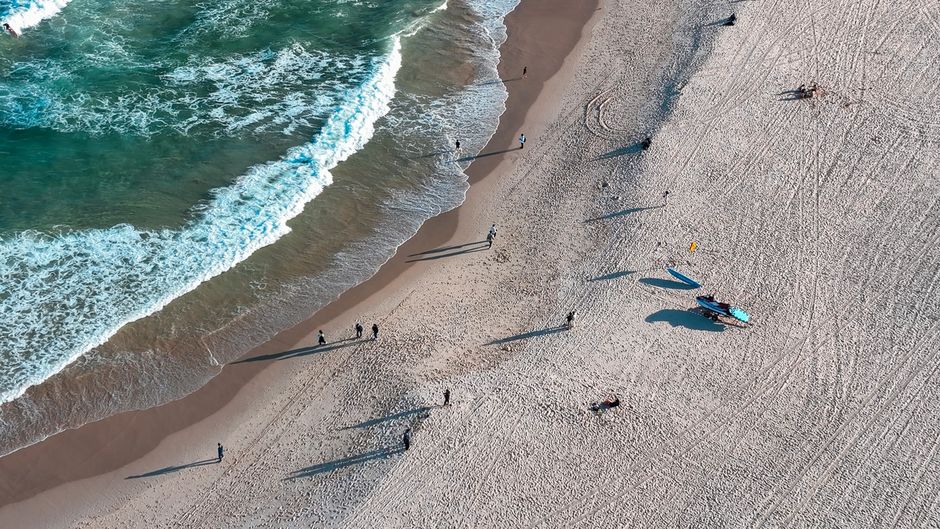
You have been here five months and had roughly four hundred excellent conversations. People at the gym know your name. The guy at the coffee place asks how your weekend was and waits for the answer. Three colleagues have said “yeah mate, we should grab a beer sometime.”
And on Sunday afternoon you have nobody to call.
This is the specific shape of loneliness in Australia, and it catches people off guard because it does not look like loneliness. In a colder country you know where you stand by week two. Here the warmth is real, immediate and completely unrelated to whether anyone will invite you to anything. Newcomers spend a year assuming friendship is forming because every surface signal says yes. Then the year ends and they have acquaintances, a WhatsApp group that never fires, and one other foreigner who is also leaving in March.
Here is what is actually happening, and what works.
Friendly is not the same as available
Australians are not putting on an act. The friendliness is genuine, and it is also cheap in the economic sense: it costs nothing to give and commits nobody to anything. A great chat at a barbecue is a complete social transaction here. It is not the opening move.
Underneath, most Australian adults are socially full. Friendship groups form at school, get reinforced at uni, then simply keep going. People in their thirties are still in group chats they joined at fifteen. Research out of Griffith University describes this exact pattern with migrants: locals warm on the surface, slow to bond, not out of hostility but because their social needs are already met. Nobody is running an audition. There is no vacancy.
Add the physical layout. Australian cities sprawl. Sydney, Melbourne and Perth are enormous low-density spreads where seeing someone requires a plan, a car or forty minutes on a train. In Madrid or Berlin you bump into the same people constantly and friendship accumulates by accident. Here, accidents do not happen.
A British expat of fifteen years put it well in news.com.au: Australians “gatekeep” their friends. You get on brilliantly with one person, you go to their things, and their circle still greets you like a stranger at the fourth event. It is not personal. Australians run parallel friend groups and rarely merge them. Multiple birthday parties, one per group, is normal here.
Four social codes newcomers get wrong
Find your best country to move to
Answer three quick questions and we will rank the best matches from our database of 197 countries.
Explore these countries
 Australia
Taking the piss. Mockery is the local dialect of affection. If an Australian starts roasting your accent, your car, your inability to pronounce Melbourne, that is a warm signal. Politeness is the cold one. Newcomers from cultures where you stay courteous until you are close read the insult as rejection and back away at exactly the moment they were being let in. Give it straight back, badly. Nobody expects you to be good at it. They expect you not to flinch.
Tall poppy syndrome. Australians dislike people who advertise themselves. Job title, salary, degree, the size of your last deal: keep all of it out of the first several conversations. Self-deprecation is the currency. Americans walk into this one at full speed and the room goes quiet in a way that is hard to identify unless someone tells you.
“Yeah, we should catch up.” This is punctuation. It is how conversations end, roughly equivalent to “see you later.” Not an invitation, no obligation attached, and waiting for the follow-up is how six months evaporate. Convert it on the spot instead: “I’m free Thursday, where’s good?” Half will dodge. The other half will show up, and those are your people. You do the converting for at least the first year.
Activity is the container. Australian friendship, especially between men, lives inside a shared thing: the team, the surf, the Tuesday run. An Italian who spent fourteen years here described losing friends the moment he stopped the activity that connected them. Bleak, until you read it the other way. That is the entire strategy: pick a container, stay in it, and the friendship builds itself over months you never have to engineer.
Where friendships actually get made
Sports clubs are the central social institution in this country, and no app replaces them. Not sport as exercise. Sport as membership.
Footy, and know which one. AFL in Victoria, South Australia, Western Australia and Tasmania. NRL in New South Wales and Queensland. Getting this wrong in a pub costs you nothing except the chance to blend in. You do not have to play. Following a team properly, having opinions, turning up to games, gives you the small talk operating system the whole country runs on.
Surf lifesaving clubs. The most underrated door in Australia, and almost nobody tells newcomers about it. Around 300 clubs on the coast, volunteer-run, permanently short of people, and they will take an adult beginner through a Bronze Medallion. You get training, a beach, a clubhouse with a bar, and a group who see you every weekend. If you live near the coast, start here.
Run clubs and parkrun. parkrun is free, 5km, 8am Saturday, more than 450 locations nationally. Same faces every week, coffee afterwards, no commitment. Private run clubs (Croissant, Cold Nips, dozens of local ones) have become the default social venue for people in their twenties and thirties, largely because drinking got expensive.
Ocean swimming. Winter swim groups, Bondi Icebergs and their equivalents in every coastal city. Shared suffering at 6am builds bonds fast.
Pub trivia. Tuesday or Wednesday, most suburbs, teams of six. Turn up alone and ask to join a team that is short. One of the few Australian settings where approaching strangers is socially normal.
Netball, cricket, touch footy. Every suburb runs mixed social competitions built for adults with no skill. Search the suburb name plus “social league.”
Volunteering. Bushfire brigades, wildlife rescue, community gardens, food relief. Repeat exposure with the same people, and you skip the “why are you here” conversation.
Work drinks. Go to every one for six months, even the boring ones. It varies by industry (recruitment and trades are easy, teaching and remote-heavy tech are hard), but Friday drinks is where social sorting happens in Australian workplaces.
The barbecue rules, briefly
Invited to a barbie? Bring your own drinks. That is what BYO means, and it is not stinginess, it is the assumption that adults sort out their own alcohol. Bring more than you will drink and leave the extras. Offer to help at the grill and accept being told no. Turn up within twenty minutes of the stated time. A six-pack and a bag of something is correct. Anything elaborate is not.
City by city, honestly
Sydney is the hard one. Rent eats your social budget and commutes are long enough that a casual drink becomes a two-hour logistical decision. People are working, and they are working to pay Sydney prices. Beautiful city, expensive social life, slow friendships. Beach and swim culture is the compensating factor. Use it hard.
Melbourne is the easiest. Denser, better public transport, a cafe and bar culture where sitting alone in public is normal, and a large population of people who also moved here. If you have a choice of city and friendship is the priority, pick Melbourne.
Brisbane sits in the middle. Growing fast, lots of newcomers, river and outdoor culture, cheap enough that people actually go out. More car-dependent than Melbourne.
Perth is tight-knit and slow. The most isolated major city on earth, which cuts both ways. Circles closed young, so breaking in takes longer than anywhere else. Once you are in, you are properly in.
Adelaide is small and connected. Everyone knows everyone, an advantage or an obstacle depending on your first few months. Cheap enough that a social life is genuinely affordable, which matters more than people admit.
Your route depends on your visa
Working holiday (417/462). Your problem is not meeting people, it is transience. You will make fifteen friends in a hostel and lose all of them to Cairns and flights home. Australians say this openly: they do not invest in people they know are leaving. If you want anything that survives the visa, get a fixed address, join something with a season, and tell people you are staying.
Skilled migrants. Strongest hand, usually wasted. You have a workplace, a permanent address and time. Say yes to everything for a year and join a club in the first month, before you feel settled.
Students. Campus clubs are easy and they are also a trap, because they leave you in an international-student bubble for three years. Force yourself into one thing with no connection to the university.
Remote workers. Highest-risk group. No colleagues, no forced structure. Co-working over home office, one morning group activity as a non-negotiable, and a fixed local anchor (same gym, same cafe, same time) or you will be lonely and blame the country.
The honest timeline
Jeffrey Hall at the University of Kansas puts casual friendship at roughly 50 hours of shared time, real friendship at about 90, and close friendship past 200. Australia does not shorten that. Sprawl and full calendars stretch it.
Practically: three months to have people who recognise you, six to have people who invite you, twelve to eighteen to have someone you would call in a crisis. Most people quit at month seven, right before the good part.
Pick two containers. Show up weekly. Convert every “we should catch up” on the spot. That is the whole method.
FAQ
Is it hard to make friends in Australia? Yes, and in a specific way. Meeting people is unusually easy. Converting them into friends is unusually slow, because most Australians have had the same friend group since school and no room in the calendar.
Why is it so hard to make friends in Australia? Three things stacked: friendship groups formed at school and never dissolved, sprawl that kills spontaneous repeat contact, and a low-pressure culture where nobody wants to impose by suggesting plans. None of it is about you.
Are Australians friendly to foreigners? Genuinely, yes. Open, informal, non-judgemental with strangers. That friendliness simply carries no implication of inclusion, which is the part that confuses people.
How long does it take to make friends in Australia? Three to six months of consistent effort for a real social circle, closer to a year for close friendships. Ten small hangouts beat one great night out.
How do I make Australian friends instead of only expat friends? Join something local rather than something international. Sports clubs, surf lifesaving, parkrun, volunteering and pub trivia are full of Australians. Expat Facebook groups and hostel bars are not.
Which Australian city is easiest for making friends? Melbourne, clearly: density, public transport, cafe culture, a large transplant population. Perth is hardest for newcomers, Sydney the most expensive to socialise in.
Do I have to like sport? No, but sport is the country’s default social infrastructure. If you skip it, replace it with something equally regular: a run club, a swim group, a trivia team, a volunteer shift.
What are the best apps to make friends in Australia? Meetup and Bumble BFF are the two with real user numbers here, plus local Facebook groups. Use them to find recurring in-person activities. An app that never leads to a weekly fixture will not produce friends.
Related reading
Friendly but unavailable is a specific failure mode. Making friends in a new country covers how to read it and the other patterns you will meet abroad, and making friends as an adult explains the hours nobody warns you about.